
When “Doing It All” Starts to Feel Like Too Much
For many working families, life can feel like a constant balancing act. Between job responsibilities, parenting duties, household management, and trying to carve out personal time, it’s easy to feel stretched thin.
You may find yourself asking:
-
- Why does everything feel so overwhelming?
-
- Am I giving enough to my kids… and my work?
-
- Why does it feel like there’s never enough time?
If this sounds familiar, you’re not alone.
In today’s world—especially for working families across Northern Nevada—balancing career, parenting, and mental health isn’t just challenging; it’s often unsustainable without the right support and strategies.
The good news? Balance doesn’t mean perfection. It means creating a system that supports your well-being, your relationships, and your long-term stability.
The Reality of Modern Family Life
The idea of “having it all” is often unrealistic. Most working parents are managing:
-
- Full-time (or demanding) jobs
-
- Children with academic, emotional, and social needs
-
- Financial responsibilities
-
- Household tasks and logistics
-
- Limited downtime
Over time, this can lead to:
-
- Chronic stress
-
- Emotional exhaustion
-
- Irritability or burnout
-
- Strained relationships at home
What’s important to understand is that this isn’t a personal failure—it’s a structural challenge. The expectations placed on families today are higher than ever.
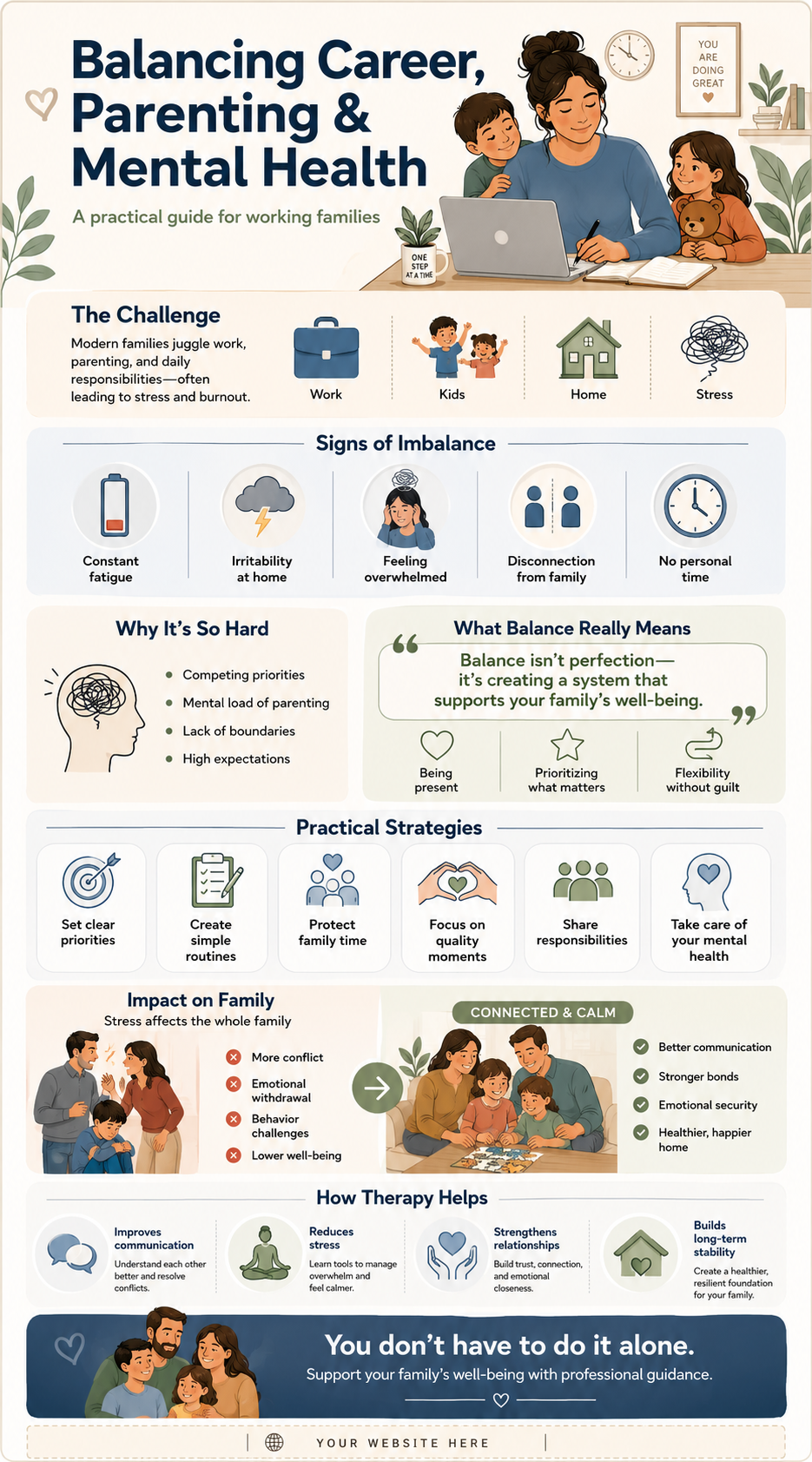
Signs Your Family Might Be Out of Balance
Sometimes imbalance doesn’t show up as a crisis. It shows up quietly, in everyday patterns.
Here are common signs to watch for:
1. Constant Fatigue
You’re always tired—even after rest—and feel like you’re just getting through the day.
2. Short Tempers and Irritability
Small things turn into big reactions, especially at home.
3. Disconnection Within the Family
Less meaningful conversation, fewer shared moments, and more time spent “just managing.”
4. Feeling Guilty No Matter What
At work, you feel like you should be home. At home, you feel like you’re falling behind at work.
5. Loss of Personal Time
Your own needs consistently fall to the bottom of the list.
Recognizing these signs early is key. They’re signals—not failures—that something needs to shift.
Why Work-Life Balance Is So Hard for Families
Work-life balance isn’t just about time—it’s about emotional and mental capacity.
Here are a few reasons it’s especially difficult for working families:
Competing Priorities
Work and family both demand your full attention—but at the same time.
Mental Load
Parents often carry an invisible checklist:
-
- School schedules
-
- Appointments
-
- Meals
-
- Emotional needs of children
This mental load can be exhausting, even if everything looks “fine” on the outside.
Lack of Boundaries
With remote work and constant connectivity, work can easily spill into family time.
Pressure to “Do It Right”
Social expectations can make parents feel like they need to excel in every role.
What Balance Actually Looks Like
Let’s redefine balance.
Balance doesn’t mean:
-
- Perfect schedules
-
- Equal time for everything
-
- Always feeling calm and in control
Instead, balance looks like:
-
- Being present where you are
-
- Having systems that reduce stress
-
- Prioritizing what truly matters
-
- Allowing flexibility without guilt
It’s not about doing more—it’s about doing what matters most, more intentionally.
Practical Strategies for Working Families
Here are realistic, sustainable ways to improve balance without adding more pressure:
1. Focus on What Matters Most
Not everything is equally important.
Ask yourself:
-
- What are the top 2–3 priorities for our family right now?
-
- What can we simplify, delay, or let go of?
This helps reduce overwhelm and create clarity.
2. Create Predictable Routines
Structure reduces stress—for both parents and children.
Examples:
-
- Consistent morning routines
-
- Regular family dinners (even if simple)
-
- Set bedtime schedules
Routines create stability, especially during busy seasons.
3. Set Clear Work Boundaries
When possible:
-
- Define a clear end to your workday
-
- Avoid checking emails during family time
-
- Communicate boundaries with your workplace
Even small boundaries can significantly improve family connection.
4. Prioritize Quality Over Quantity
You don’t need hours of perfect family time.
Even 15–20 minutes of:
-
- Focused attention
-
- Conversation
-
- Play
can make a meaningful difference for your children and your relationships.
5. Share the Load
Balance isn’t a solo effort.
-
- Divide responsibilities between partners when possible
-
- Involve children in age-appropriate tasks
-
- Accept help from trusted friends or family
You don’t have to carry everything alone.
6. Take Care of Your Own Mental Health
Your well-being directly impacts your family.
That includes:
-
- Getting enough rest
-
- Managing stress
-
- Having space to process your emotions
When parents feel supported, the entire family benefits.
The Impact of Stress on Family Dynamics
When stress builds up, it doesn’t stay contained—it spreads.
You may notice:
-
- More conflict between partners
-
- Children acting out or withdrawing
-
- Less patience and more reactivity
This isn’t because anyone is doing something wrong—it’s because stress affects how we communicate, respond, and connect.
The goal isn’t to eliminate stress entirely—it’s to manage it in a way that protects your relationships.
How Therapy Can Support Working Families
Many families wait until things feel overwhelming before seeking help. But therapy is most effective when used as proactive support.
At Healing Minds, therapy focuses on:
Strengthening Communication
Helping families express needs clearly and listen effectively
Managing Stress and Emotions
Developing tools to regulate emotions and reduce reactivity
Improving Family Dynamics
Understanding patterns and creating healthier interactions
Supporting Parents
Providing guidance, validation, and practical strategies
Creating Long-Term Stability
Building skills that support your family well beyond the therapy room
Therapy Isn’t Just for Crisis—It’s for Growth
There’s a common misconception that therapy is only for when something is “wrong.”
In reality, therapy can help you:
-
- Prevent burnout
-
- Strengthen relationships
-
- Navigate transitions (like summer schedule changes)
-
- Feel more confident as a parent
Think of it as an investment in your family’s long-term well-being.
Preparing for Summer: Why Now Matters
As May approaches, many families are heading into a seasonal transition.
Summer often brings:
-
- Changes in routine
-
- Increased time at home
-
- Childcare challenges
-
- Disrupted schedules
Without preparation, this shift can increase stress.
Now is the ideal time to:
-
- Establish supportive routines
-
- Address ongoing stress
-
- Strengthen communication within the family
A little preparation now can make a significant difference in how your family experiences the months ahead.
A More Sustainable Way Forward
Balance isn’t something you achieve once—it’s something you adjust over time.
There will be busy seasons. There will be stressful moments.
But with the right support and strategies, your family can:
-
- Feel more connected
-
- Communicate more effectively
-
- Handle stress with greater resilience
You don’t need to do everything perfectly—you just need a system that works for your real life.
When to Consider Reaching Out
It may be time to seek support if:
-
- Stress feels constant or overwhelming
-
- Family conflict is increasing
-
- You feel emotionally exhausted
-
- You’re struggling to stay present at home
-
- You want to improve your family’s overall well-being
Seeking help isn’t a last resort—it’s a practical step forward.
Final Thoughts: You Don’t Have to Do This Alone
Balancing career, parenting, and mental health is one of the most challenging responsibilities many people face.
But it’s also one of the most meaningful.
With the right support, your family can move from simply “getting through the day” to building a more connected, stable, and fulfilling life together.
If your family is feeling stretched thin, support is available.
Healing Minds provides compassionate, relationship-centered therapy for working families across Northern Nevada—helping you manage stress, strengthen connections, and build a healthier future together.
Take the first step today. Schedule a therapy session and start creating a more balanced life for your family.